
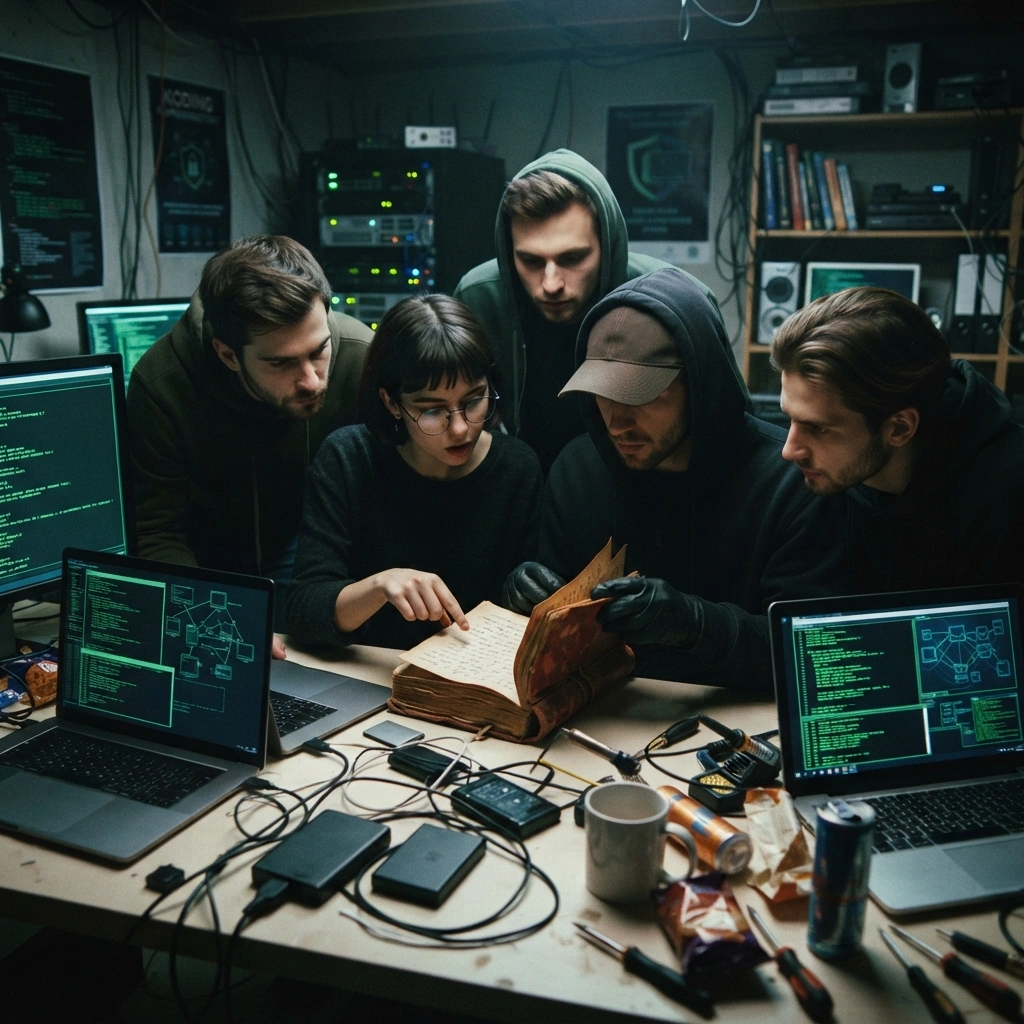
AI Now Has a "Private Diary"—And Rivals Want to Steal It

Imagine you interview a self made billionaire and ask them their 'secret of building their multi billion empire'. Now instead of responding with a successful polished corporate pitch, they take scribbling pad and start jolting raw, chaotic truth how they actually got it together along with all unglamorous, messy realities of earlier failures, closed calls and how they battled out their challenges ; you are not only leaving with their glamorous success story, but also get a good view of their backstage, unfiltered trials of reality and secrets how they built their empire.
AI also behave pretty much similar fashion.
You would have noticed, before giving the answer the AI models take a few seconds to "think". Behind the scene, it is quietly talking to itself, planning out its ideas, testing math formulas, and catching its own mistakes. They call it 'reasoning trace' or 'chain-of-thought'. So this reasoning will show you how AI arrived at its answer and how it solved all the puzzle. These scribble notes or personal diaries are its strength and if a rival competitor gets hold if it , it can be serious IP loss. Worst, often extraction also take away the safeguards and the resultant imitation model can be used for malicious purposes.
How do they do it? Usually by a process call AI distillation by training a small model by feeding it the answers of a giant model.
When major AI companies first realized competitors were trying to steal their models' thinking, they decided to scramble the diary. Instead of showing the full chain-of-thought on your screen, the system locked these thoughts inside an encrypted file and only showed a short, harmless summary.
But the problem the researchers found was this encrpted file/ digital package can be worked on any model of the AI family.
When you ask a flagship AI model (like GPT-6.2 or Claude Opus) a complex question, it locks its private reasoning inside an encrypted "briefcase" and strictly refuses to read those hidden thoughts out loud. However, attackers discovered they could simply hand that same locked briefcase to the company's cheaper, smaller model (like GPT-Luna or Claude Haiku); because the "little brother" model shares the exact same decryption keys but lacks strict safety training, a simple prompt asking it to read the contents caused it to happily unlock the briefcase and reveal every secret thought word for word.
Now the problem of reading these reasoning diaries are not just limited to AI companies IP. Researchers also found significant number of API keys, credentials, addresses etc. In the exposed reasoning files.
Now you may be wondering how they appear in the reasoning files?
It is because when a developer ask this AI agents to 'cleanup sensitive information from the document or the code' the model ofen repeat the data search and store it in their reasoning file while deleting from the actual developer artifacts.
To prevent this trick, the AI companies such as OpenAI and Anthropic rolled out stringent safeguard such as "preserved thinking" by limiting them to specific chat and account, instantly deleting the reasoning file if they observe any change in your input message, prevent lower or smaller models to read these reasoning files.
Conclusion
Artificial intelligence has evolved from simple text prediction into complex, multi-step problem solving. As AI models become more capable, their "train of thought" has become the crown jewel of computing.

Comments